In the Era of AI Search, Why Has LinkedIn Become a New Arena for B2B Brands to Establish Credibility?
Generative AI is shifting the starting point of B2B buyer research from "clicking on search links" to "obtaining direct answers." Future competition will hinge not only on keyword rankings but also on whether a brand is accurately understood by AI and quickly validated by buyers. Public, professional, and consistent content shared by companies and experts on LinkedIn, aligned with their official websites, is becoming a crucial part of a brand's digital evidence.
In this article
- From search links to direct answers
- From "Visibility" to "Buyability"
- Why one official website is no longer enough
- Official websites, LinkedIn, and GEO must speak the same language
- LinkedIn content should make expertise citable
- VALTARIQ: turning corporate knowledge into lasting global digital assets
- Check your brand knowledge ecosystem
01From search links to direct answers
In the past, global buyers looking for suppliers would typically open Google, enter a product name, and browse through websites one by one.
Today, an increasing number of buyers ask tools like ChatGPT, Gemini, Copilot, or Google AI directly:
- "Which suppliers in this industry are worth considering?"
- "What capabilities should I prioritize when selecting a Chinese manufacturer?"
- "Which technical solution is best suited for my project?"
It may look as if the search box has simply been replaced by a chat interface, but the rules of brand discovery have fundamentally changed.
Traditional search engines provide links. Generative AI reads, compares, and synthesizes information from multiple sources to generate a comprehensive answer. Often, buyers form their initial impressions, or even complete a preliminary screening, based on the AI's response before they ever visit the company's official website.
02From "Visibility" to "Buyability"
LinkedIn characterizes this shift as a move from "Visibility" (being seen) to "Buyability" (being considered for a purchase decision). A study conducted by LinkedIn and Meltwater, analyzing 9.5 million AI citations, reveals that LinkedIn content has become a key source for various AI models answering B2B-related queries.
This doesn't mean that posting on LinkedIn guarantees an AI citation. But it sends a clear signal: public professional content, authentic personal profiles, and ongoing industry discussions are entering the AI's information ecosystem.
AI looks not only at what a company says about itself, but also at how the market describes the company.
03Why one official website is no longer enough
In traditional marketing, companies often treat their official website as the sole hub for brand information: company profile, product specifications, certifications, case studies, and contact details.
In the era of AI search, a self-narrative on a single website is often not enough. Generative models can assess the following from multiple public sources:
- Who the company is, its core business, and the markets it serves.
- Whether company leaders and technical experts demonstrate genuine, consistent professional expertise.
- Whether the official website, LinkedIn company page, employee profiles, and third-party data align with one another.
- Whether the content genuinely addresses industry issues rather than simply stacking marketing slogans.
- Whether the company has verifiable case studies, technical experience, and external citations.
So the value of LinkedIn goes far beyond "social media exposure." Company pages, profiles of founders and executives, content from technical experts, and interactions with clients and the industry together form a body of public evidence that both buyers and machines can understand.
This is the "digital evidence" logic: a factory's capabilities become trust that global buyers can see only when they are expressed in a structured way, communicated consistently, and validated by multiple parties.
04Official websites, LinkedIn, and GEO must speak the same language
Many companies have their official website and LinkedIn page maintained by separate teams over the long term. The result is often:
- The company positioning on the website differs from the description on LinkedIn.
- Product names on the website do not match the English terminology employees use in external communications.
- The company claims certain capabilities but lacks case studies, expert explanations, or third-party evidence.
- LinkedIn posts are limited to holiday greetings and trade show photos, failing to show actual technical expertise.
This fragmentation hinders buyer assessment, and it also makes it harder for search engines and AI to understand the brand.
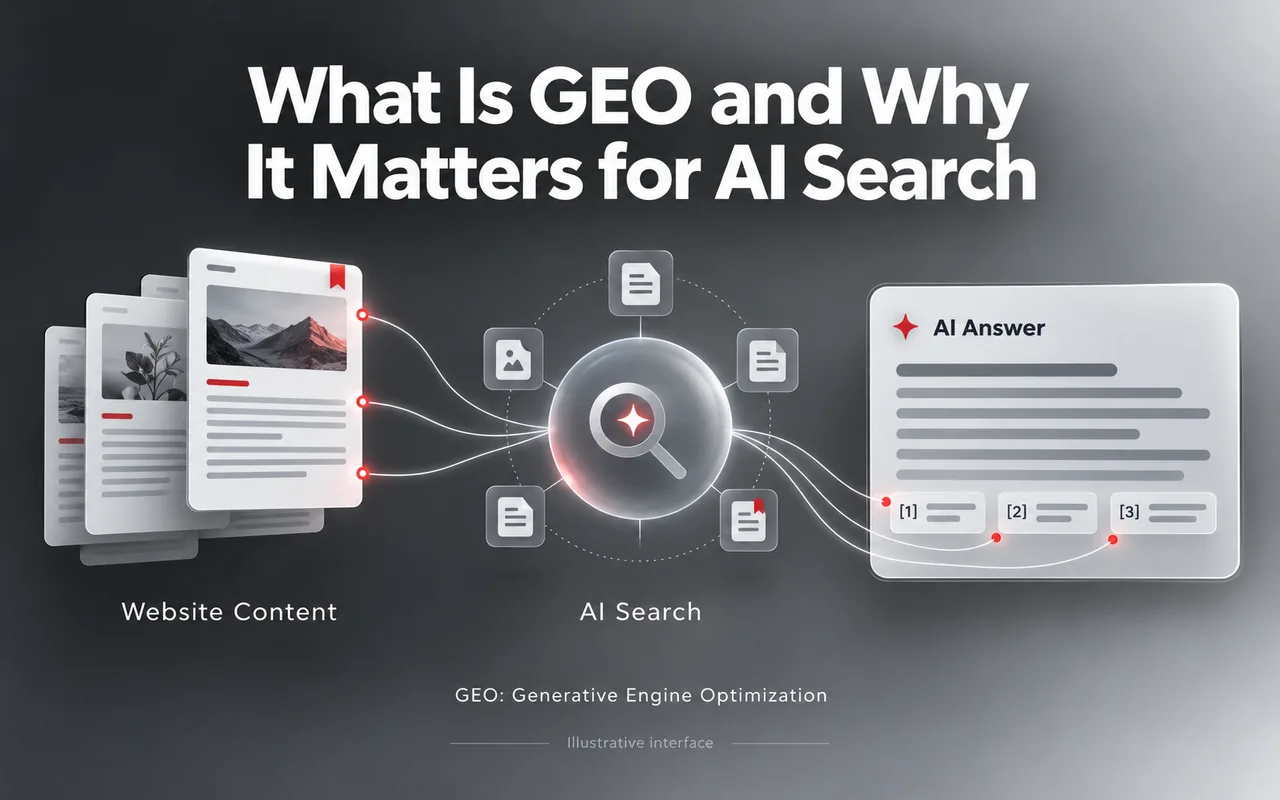
Effective GEO is not about stuffing a few "AI keywords" into articles. It is about establishing a consistent brand knowledge system:
- Standardize brand names, products, technologies, application scenarios, case studies, and qualifications within the corporate knowledge base.
- Create comprehensive, structured, and verifiable fact-based pages on the brand's independent website.
- Use the company page and the profiles of genuine experts on LinkedIn to consistently articulate these facts.
- Establish external cross-validation through industry media, professional platforms, and client testimonials.
- Continuously monitor, correct, and update public-facing content.
Only when these channels work together around a consistent set of facts can a company move from merely having "information online" to being a clear brand entity in the eyes of both buyers and AI.
05LinkedIn content should make expertise citable
In the quest for better AI visibility, some companies have turned to mass-generating posts with AI. But quantity does not equal quality.
LinkedIn's recommendations on AI visibility emphasize educational content, professional expertise, clear structure, and credible human voices.
For B2B manufacturers, content worth cultivating over the long term includes:
- How products fit specific application scenarios.
- The logic behind choosing different processes, materials, and solutions.
- How quality control and delivery risks are managed.
- Insights from technical leaders on industry trends.
- Problems encountered in real projects and how they were solved.
- Technical details that buyers often overlook but that still affect outcomes.
Such content serves buyers, and it also builds a knowledge base that can be reused as website articles, FAQs, sales collateral, and AI-interpretable knowledge assets. For the practical side of LinkedIn prospecting, see our Sales Navigator guide.
06VALTARIQ: turning corporate knowledge into lasting global digital assets
VALTARIQ integrates LinkedIn into a comprehensive, AI-driven strategy for taking a brand global.
We begin by establishing a corporate knowledge foundation, organizing information on products, technologies, case studies, expert insights, and customer inquiries. We use AI agents to assist in generating multilingual content, which is then fact-checked and refined by professionals. At the same time, we link this content to the brand's independent website, GEO and SEO efforts, global authoritative endorsements, social media, and advertising campaigns.
Within this ecosystem, LinkedIn's role goes beyond generating a single click. It ensures that the company and its experts keep a consistent presence in professional contexts. It provides human context for website facts, validates technical capabilities, and makes sure the brand projects a clear, consistent identity to buyers, search engines, and generative AI alike.
In the era of AI search, what companies truly need is not merely higher exposure, but greater interpretability, credibility, and likelihood of being chosen. When global buyers ask AI about suppliers, does your business have the clear, professional, and consistent public evidence it needs to make it into the AI's answers and the buyers' shortlists?
07Check your brand knowledge ecosystem
If you would like to know whether your corporate website, LinkedIn presence, and GEO (Generative Engine Optimization) strategy have formed a cohesive brand knowledge ecosystem, contact VALTARIQ to schedule an assessment of your global digital assets and AI visibility.
Want results like this for your brand?
Tell us your market, product and goals. We will reply with a clear plan.
AI Search in October 2026: Five Changes Exporters Should Know
What Is GEO and Why It Matters for AI Search